Partner Portal
A SaaS Ticketing Platform | Experience LLC | 2018-2020

Project Overview
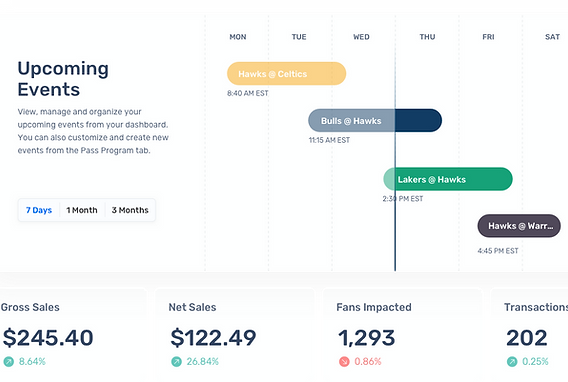
A self-service event management platform that empowered partners to independently create, manage, and track their events. This new system was crucial for the future scalability and efficiency of the product as a whole. In essence, this redesign would serve as a foundation for the core product's future direction. Leveraged Google Material's responsive framework to ensure a seamless user experience across all devices, from smartphones to desktops.
Objective:
Redesign and modernize an outdated legacy ticketing system to enhance usability, performance, and scalability for high-volume event partners.
My Role
UX Design
Design System Development
Team
1 Product Manager
1 Engineering Manager
1 Front-end Engineer
2 Back-end Engineers
1 Product Designer
The challenge
According to our 2018 partner survey, 80% of users cited the need for a more mobile-friendly experience. Many of our partners manage live events and needed to create, edit, and report on ticketing quickly—often while on-site or between meetings. The existing system was slow, inconsistent, and desktop-bound.

My role & approach
I owned the full design process—from research and ideation through delivery and QA. At the same time, I spearheaded the creation of a new internal design system to support more consistent, scalable development across future product lines.
-
Conducted workflow mapping sessions with internal ops and external partners to define key use cases
-
Introduced responsive UI patterns to accommodate mobile-first usage
-
Built a React-based design system using Material Design as a foundation, allowing for modularity and quick iteration
-
Partnered with engineering to optimize front-end performance and enhance code maintainability
-
Embedded small moments of delight into the experience (e.g., microinteractions and contextual success states) to reduce friction and improve satisfaction
The Outcome
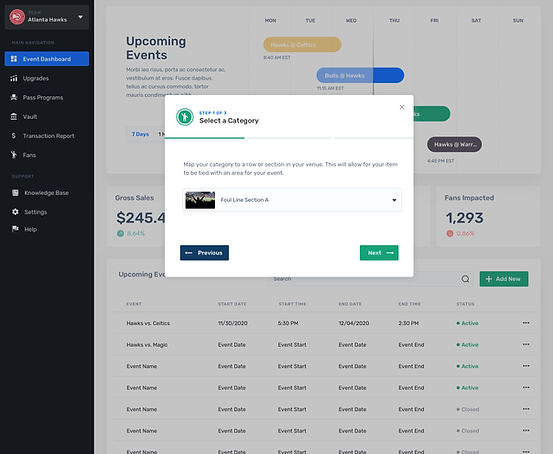
The redesign resulted in a ~40% improvement in load times, enabling faster task completion for partners and significantly enhancing user experience. By incorporating usability testing and direct partner feedback, overall satisfaction increased. The introduction of reusable components and a shared design language reduced design and development time for future features, while the new scalable infrastructure laid the foundation for additional product launches across the organization.